





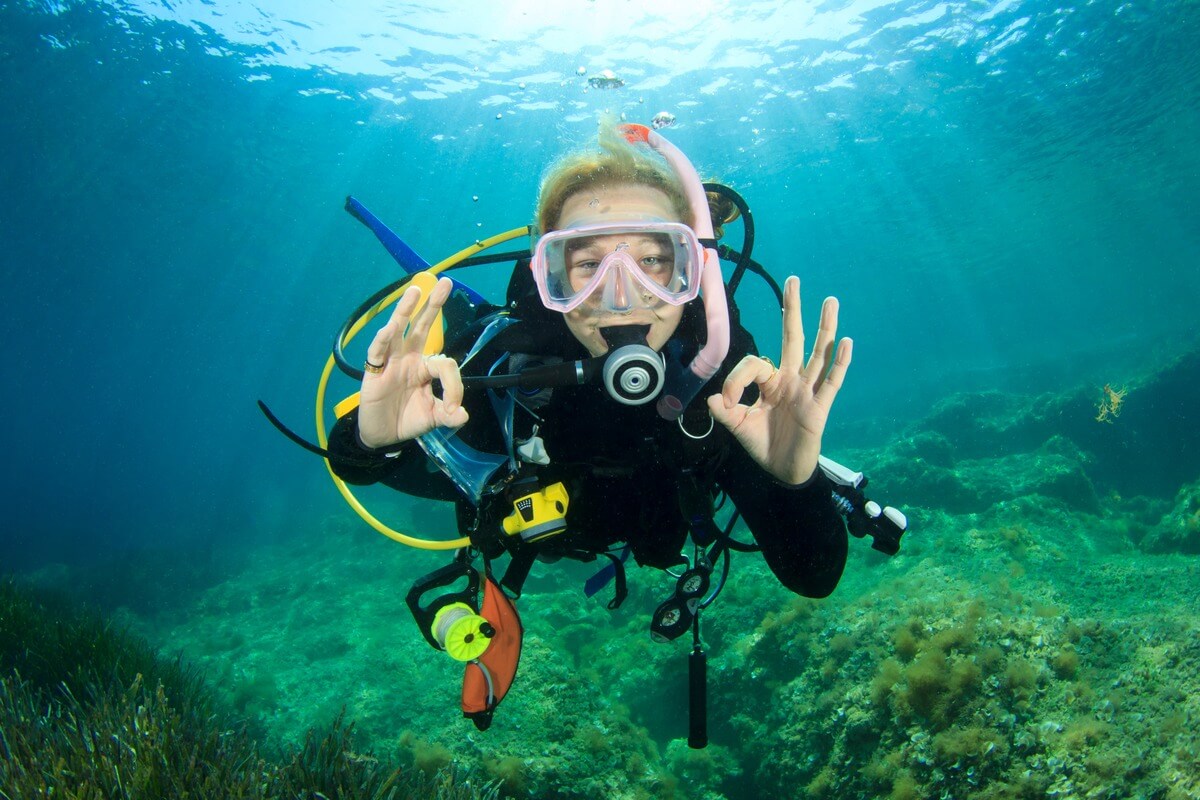
A first scuba experience lets you find out how you feel using diving equipment under supervision. It is a chance to ask questions and try something unfamiliar, not an obligation to complete a full course or reach a particular depth.
Before booking, establish exactly what is being offered. A pool try dive, an introductory experience in sheltered water and an entry-level certification course are different products. Their prerequisites, supervision and outcomes need to be explained separately.
A taster is different from a qualification
A short introductory session does not qualify you to dive independently afterwards. An entry-level course includes structured learning and assessment, with conditions attached to the resulting certification. Do not assume a souvenir certificate from an experience is equivalent to a diver qualification.
For one example, PADI distinguishes Discover Scuba Diving from Open Water Diver training. Ask the provider for the exact programme name and what, if anything, can count towards later training.

Choose the setting that suits your confidence
If your main question is whether you enjoy breathing through scuba equipment, a local pool introduction may be a useful first step. You can separate that new experience from boat travel, unfamiliar surroundings and the logistics of a holiday.
Ask how entry and exit work, whether you begin where you can stand and what happens if you want to stop. Describe your water confidence honestly. Swimming requirements differ between programmes: being accepted for a particular introductory experience does not mean you meet the requirements of a full course.
Complete the paperwork before travelling
Request the medical questionnaire and participant information in advance. Read them carefully and follow any requirement for medical advice or clearance. Do not ask a booking agent to reinterpret an answer so that you can take part.
PADI’s certification FAQ explains its medical screening requirements. BSAC also publishes a Try Dive medical and responsibility declaration. Use the form required by your actual provider and programme. This article cannot decide whether you are medically fit to dive.
Find out who will supervise you
Ask who conducts the session, what their role is and how many participants they supervise in the water. A reassurance such as “all levels welcome” does not answer those questions. You should also know how the instructor will communicate with you and how to signal discomfort or the wish to end the experience.
Different agencies and settings have different standards. Do not take a ratio quoted for one pool programme and assume it applies to another programme in the sea. Ask the organiser to explain the arrangements for your specific session.
Expect equipment fitting and a briefing first
The team should help fit the equipment and explain the parts you will use. Listen carefully rather than worrying about remembering every name. Ask for an explanation again if a control or instruction is unclear.
Tell the instructor if the mask, suit or other equipment feels uncomfortable. Do not make adjustments to unfamiliar equipment on your own. The briefing should explain the activity, communication and the response if something does not feel right.
Let the instructor set the pace
You may spend time getting comfortable before moving around underwater. That is part of the experience, not a delay you need to apologise for. Do not compare your pace with another participant or feel you must continue because someone is taking photographs.
Depth and duration are not useful measures of success for a first session. A calm introduction that you understand is more valuable than reaching a limit you were not comfortable approaching. Follow the instructor’s directions and raise discomfort immediately.
Bring the basics and confirm what is supplied
Ask about swimwear, towels, changing facilities, suitable clothing afterwards and any equipment you are expected to provide. Avoid buying a full set of kit before trying the activity. Confirm the whole price, including any optional open-water element, photographs or materials.
Check the cancellation and rescheduling policy, particularly if the session is part of a trip. Leave time for paperwork and questions instead of arriving just as the activity is due to start.
Use the debrief to choose your next step
Afterwards, ask what a full course would involve: theory, practical sessions, water skills, assessment, timing and total cost. You can decide to continue, take another introduction or leave it there. None of those choices needs defending.
Families should also read our guide to getting children started in scuba. Explore the Scuba Diving hub for more reading, while keeping hands-on instruction central to learning.
More guides to help you prepare
- How to Choose a Dive School: Questions to Ask Before Booking
- What to Pack for Your First Dive Course
Further Reading