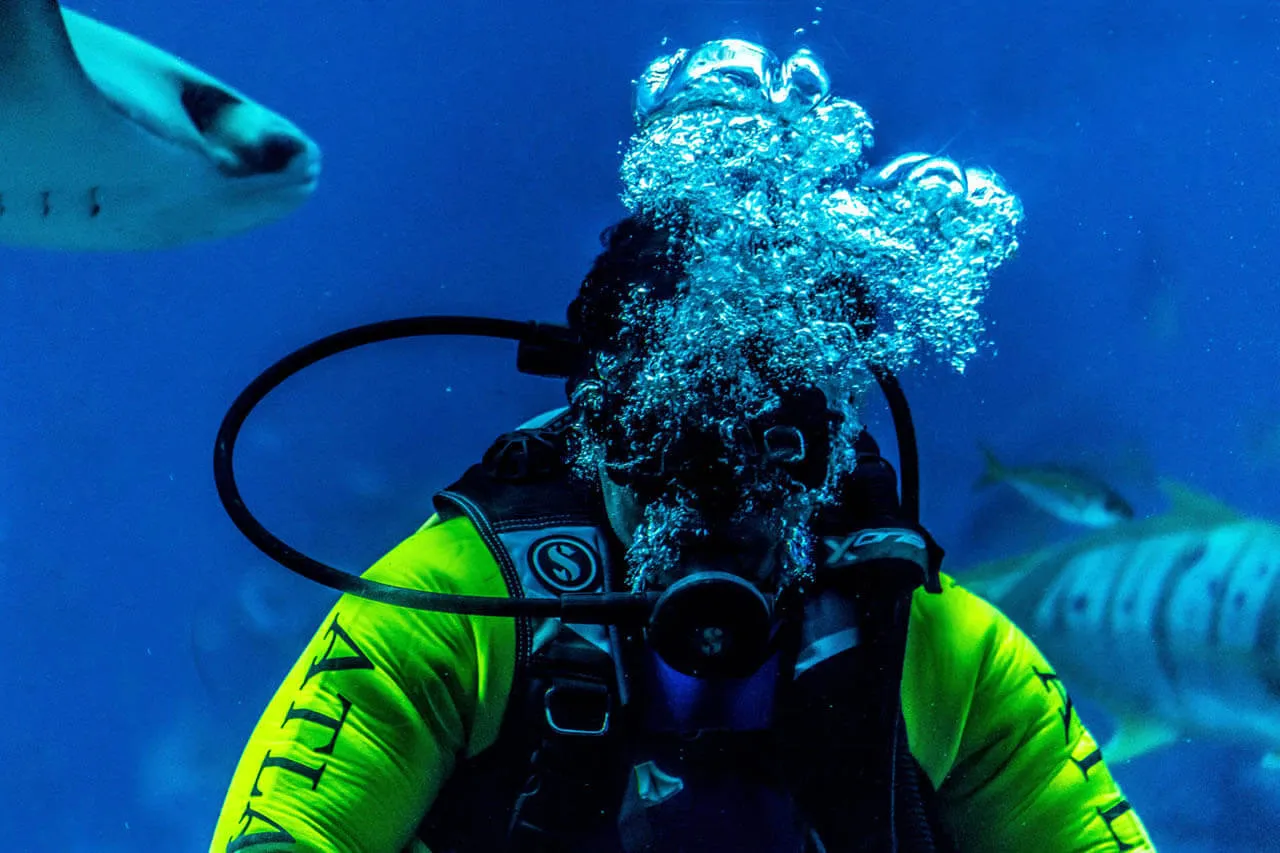





A worthwhile underwater photograph should not depend on disturbing the subject or damaging its surroundings. If taking a picture makes you lose awareness of your buoyancy, buddy or position, put the camera aside and deal with the dive first.
Good etiquette begins before entering the water. Discuss the plan with the guide and buddy, understand the local rules and be prepared to miss a photograph when the circumstances are unsuitable.
Be ready to dive with a camera
A camera introduces another task. Before adding it, ask your instructor whether you can manage the dive comfortably and hold position without touching the bottom. Practise the setup in an appropriate supervised environment.
Green Fins’ photography guidance emphasises buoyancy and preparation. The camera should fit within your existing capacity, not take attention away from basic diving responsibilities.

Secure the equipment before approaching
Keep the camera, lighting and other equipment arranged so that they do not trail or catch. Check the setup with a suitable professional rather than improvising attachments. Consider where each part will be when you turn or change position, not just when you hold it in front of you.
A clear view through the lens can hide what is happening behind your fins or below your body. Keep enough room to move away without making contact.
Leave the animal where it is
Do not touch, move, chase or reposition wildlife for a cleaner background. Do not ask a guide to do it for you. A subject partly hidden in its habitat is not a defective scene that needs rearranging.
If an encounter is brief, let it be brief. Avoid blocking the animal’s route or surrounding it with other divers. Treat signs of disturbance as a reason to give more space and move on, following the guide’s instructions.
Keep the reef out of your support system
Coral is not a camera rest, handhold or place to settle while adjusting settings. Do not push equipment against it or move objects to improve the frame. If you cannot make the photograph without support from the habitat, choose another subject or stop shooting.
The Green Fins advice on managing photographers explains why position, buoyancy and awareness matter. Give your guide permission to interrupt a shot when they need your attention.
Use light considerately
Follow restrictions on flash, strobes and torches. Some sites or encounters require additional limits. Avoid assuming that repeated flashes are harmless simply because an animal remains in place.
Green Fins’ photographer guidance recommends limiting flash exposure and avoiding disturbance from lights on night dives. Ask the operator for the rules that apply to the species and site you are visiting. Local restrictions may be stricter.
Share space with other divers
Agree how photography fits into the group’s pace before the dive. Do not separate from a buddy or turn a guided group into an unplanned personal photo session. Ask whether a more suitable arrangement is available if photography is the main aim.
Allow others an unhurried view without crowding the subject. Avoid competing for the same position or stirring sediment as you leave. Sometimes the considerate choice is to watch the encounter without raising the camera.
Do not reward poor practice
Be clear before booking that you want wildlife encounters without handling or manipulation. Explain that an ethical missed photograph is acceptable. If a guide stops an approach or declines to disturb an animal, respect that decision.
If you see behaviour that concerns you, discuss it with the operator through the appropriate process after the dive. Describe what you observed accurately rather than making assumptions about motives.
Caption the result honestly
Do not imply that a staged or heavily edited image documents an untouched natural encounter. Be careful with species identification and location details, especially where disclosure could increase pressure on vulnerable wildlife. Check uncertain identifications with an appropriate source.
For related trip-selection questions, read our ethical shark-conservation travel guide. Explore the Scuba Diving hub for more reading. The photograph is optional; respecting the dive and its surroundings is not.